
-
 admin
admin - Posted on
- Categories:Home Remedies
- 0 comments

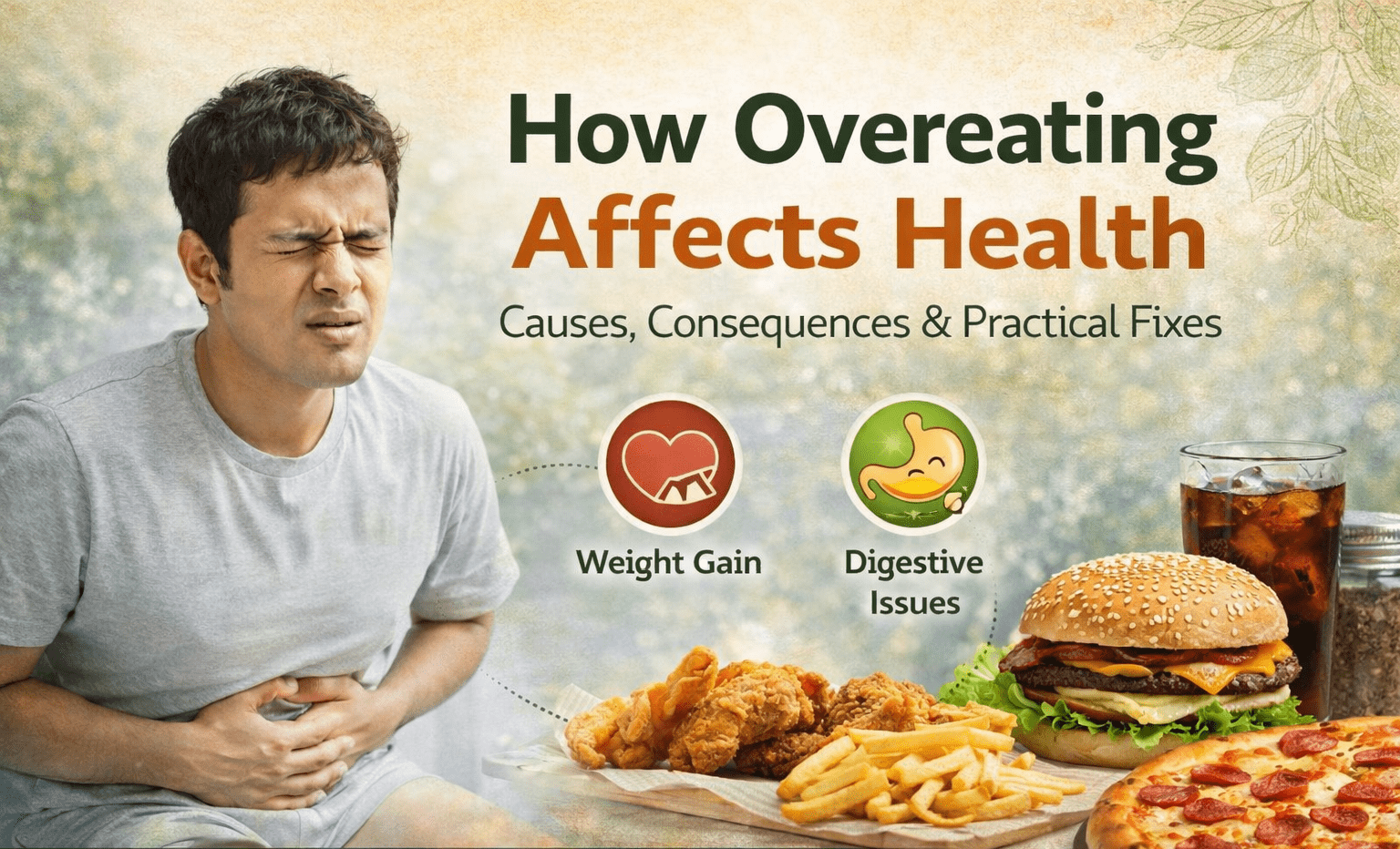
Overeating — eating more calories than your body needs on a regular basis — affects far more than your weight. From immediate discomfort to long-term metabolic, cardiovascular and mental-health impacts, the consequences are multi-system. This guide explains how overeating harms health, why it happens, practical steps to regain balance, and when to seek a medicine-aware consultation.
Why overeating happens
- Large portion sizes, easy access to calorie-dense processed food.
- Emotional eating (stress, boredom, anxiety).
- Disrupted hunger cues from irregular meals, poor sleep or heavy alcohol.
- Food environments and social habits (buffets, late-night eating).
- Underlying medical or psychiatric causes (hypothyroidism, binge-eating disorder).
Immediate effects of overeating
- Gastrointestinal discomfort: bloating, gas, reflux and indigestion.
- Post-meal sleepiness: a strong insulin response and blood flow shift to digestion can cause fatigue.
- Acute rise in blood sugar and triglycerides after high-carb or high-fat meals.
- Mood changes: shame, guilt or irritability after episodes of overeating — which may perpetuate emotional eating cycles.
How repeated overeating damages health
- Weight gain and obesity: chronic calorie surplus → fat storage and increased BMI.
- Insulin resistance & type 2 diabetes risk: repeated high glucose/insulin spikes impair metabolic signalling.
- Cardiovascular risk: higher LDL, triglycerides, blood pressure and systemic inflammation raise heart disease risk.
- Fatty liver (NAFLD): excess calories, especially from sugar and alcohol, promote liver fat accumulation.
- Digestive disorders: chronic reflux (GERD), gallstones and constipation risk increase.
- Hormonal disruption: altered leptin/ghrelin signalling blunts satiety cues, making overeating harder to control.
- Mental-health impact: ongoing bingeing or loss of control can lead to depression, anxiety or eating disorders.
- Physical function & sleep: reduced mobility, sleep apnea risk and poorer recovery after exertion.

Biological mechanisms — why overeating is toxic
- Excess substrate: surplus carbohydrates and fats produce metabolic byproducts (lipotoxicity, glycation) that stress cells.
- Inflammation: overnutrition activates immune signalling (IL-6, TNF-α) that promotes chronic low-grade inflammation.
- Mitochondrial/oxidative stress: persistent energy overload impairs cellular energy factories, reducing metabolic flexibility.
- Gut microbiome shifts: diets high in ultra-processed foods alter gut flora, promoting metabolic dysfunction.
Practical short-term fixes after an overeating episode
- Don’t punish yourself — avoid skipping the next meal.
- Hydrate with water; a short walk (10–20 minutes) helps digestion and glucose handling.
- Choose light, balanced next meals (protein + vegetables) and avoid another heavy meal late at night.
- Gentle breathing or 5–10 minutes of mindfulness to interrupt shame-eat cycles.
Long-term strategies to prevent overeating
- Regular meals & protein at each meal to stabilise appetite hormones.
- Plan portions & keep calorie-dense temptations less available (remove trigger foods from easy reach).
- Improve sleep & stress management — both strongly influence hunger/satiety signalling.
- Mindful eating habits: eat slowly, put cutlery down between bites, notice fullness cues.
- Increase fibre, protein & whole foods — they increase satiety per calorie.
- Structured physical activity to improve appetite regulation and insulin sensitivity.
- Behavioral support: CBT skills, pillared routines, or accountability tools (food logs, apps).
When overeating requires professional help
Seek a consultation if you experience:
- Recurrent loss of control around food (binge-eating episodes).
- Rapid weight gain, crushing fatigue, or unexplained metabolic changes.
- Signs of eating disorder (purging, extreme dieting, body-image distress).
- Persistent reflux, severe stomach pain, or any alarming medical symptoms.

For a medicine-aware, personalised plan that addresses medical causes, behavioural strategies and safe dietary changes, book a FREE consultation with Vedic Upchar: https://vedicupchar.com/doctor-consultation
Quick FAQ
Q: Is occasional overeating harmful?
A: One-off overeating is usually harmless; the problem is frequent, repeated episodes that create metabolic and psychological patterns.
Q: Will exercise offset overeating?
A: Exercise helps energy balance and metabolic health, but it’s not a licence to eat excessively—habit change is key.
Takeaway: Occasional overeating happens — but repeated overeating rewires hormones, increases inflammation and raises long-term metabolic and mental health risks. Focus on consistent habits (regular meals, protein, sleep, stress tools, mindful eating). If overeating feels out of control or is causing health problems, get a personalised, medicine-aware consultation: https://vedicupchar.com/doctor-consultation.
