
-
 admin
admin - Posted on
- Categories:Home Remedies
- 0 comments

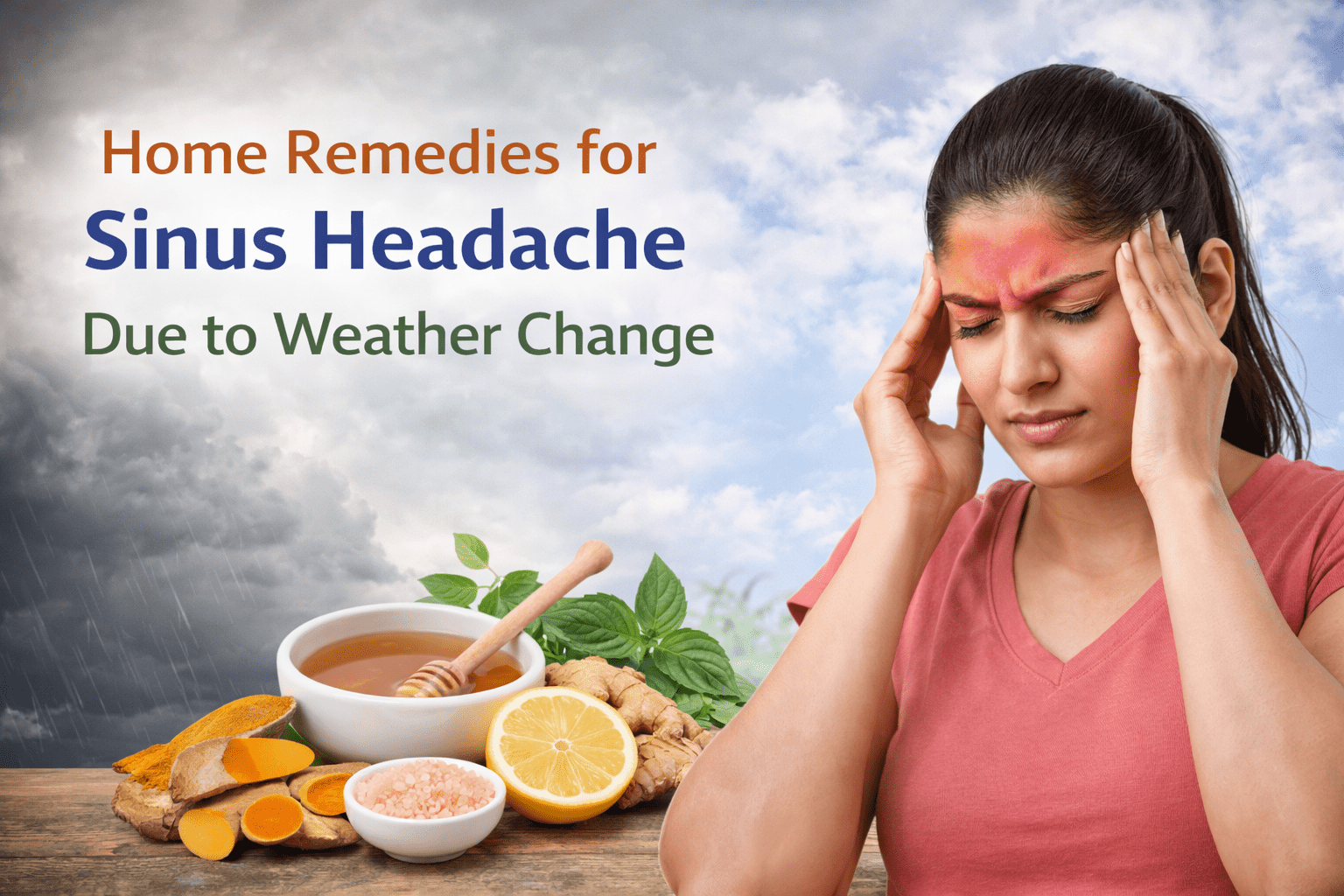
A sinus headache during sudden weather changes is common — shifting humidity, cold winds or increased pollen can inflame your sinuses and cause pressure, aching around the forehead/cheeks and a heavy, often worsening headache. This guide shares safe, practical home remedies you can use right away, prevention tips, and clear signs for when to get a medical consultation.
The problem — why weather change triggers sinus headache
Weather shifts affect the nasal lining and mucus. Cold, dry air thickens mucus and reduces cilia function (the tiny hairs that clear your sinuses). Sudden humidity or rain can increase allergens and nasal congestion. The result: blocked sinus drainage, rising pressure in the sinuses and the characteristic sinus headache (face/forehead pain that often increases when bending forward).
Quick relief — safe home remedies that usually help
1. Steam inhalation (gentle)
Sit over warm (not boiling) steam for 5–10 minutes, once or twice daily. Steam loosens mucus and eases pressure. If you have asthma or are very sensitive, prefer a humidifier or warm shower instead.
2. Saline nasal rinse or spray (neti / saline spray)
Use a saline nasal rinse (sterile/boiled then cooled or distilled water) or a saline spray to flush out mucus and allergens. This improves sinus drainage and reduces headache intensity. Follow safe technique and equipment cleaning instructions.
3. Warm compress on face
Apply a warm (not hot) compress over your forehead and cheeks for 5–10 minutes several times a day — the warmth encourages sinus drainage and relieves pain.
4. Hydration & warm fluids
Drink warm water, herbal teas (ginger, tulsi) and clear broths to thin mucus. Proper hydration makes mucus easier to clear and reduces pressure.
5. Nasal decongestant caution
Short-term oral or nasal decongestants can relieve severe congestion — but nasal sprays must not be used more than 3 days (rebound congestion). Oral decongestants aren’t suitable for everyone (high blood pressure, certain medications). Check with a clinician before use.
6. Steam with mild steam-friendly herbs (optional)
A tiny pinch of ajwain or eucalyptus leaves in steam may help for some adults — avoid essential oils directly for children, pregnant people and those with asthma.
7. Elevate your head while sleeping
Sleeping propped up on an extra pillow improves drainage and reduces morning sinus pressure and headache.
8. Gentle pressure massage
Massage the bridge of the nose, forehead and cheekbones using circular motions for 2–3 minutes — this can temporarily relieve pressure and pain.

Diet & lifestyle supports to speed recovery
- Avoid dairy if you notice it thickens mucus for you (individual variability).
- Include warm anti-inflammatory drinks (ginger-turmeric tea).
- Rest, limit screen time and avoid smoky/irritant environments.
- Use a cool-mist or warm-mist humidifier to keep indoor air comfortable (clean regularly).
3-day at-home care plan
- Day 1: Start saline rinses 2× (morning & evening), steam 1×, warm compress 3×, hydrate well.
- Day 2: Continue rinses; add gentle massage and extra rest; consider short-term oral decongestant only if recommended by a clinician.
- Day 3: Reassess — if pressure and headache are improving, continue home care. If worse or fever appears, get medical review.
When this is NOT simple sinus headache — get medical help
Seek prompt consultation if you have any of the following:
- High or persistent fever, severe facial swelling or redness.
- Severe, worsening headache not eased by home measures.
- Double vision, drooping eyelid, eye pain or changes in vision.
- Confusion, neck stiffness, or signs of neurological change.
- Symptoms lasting more than 10–14 days or recurrent severe episodes.
These could signal complications (orbital or intracranial spread, bacterial sinusitis, or other causes) that require urgent medical assessment.
Special cautions
- Children & infants: avoid pot steam and essential oils; use saline sprays and humidifiers and consult a paediatrician if symptoms are significant.
- Asthma/COPD: ask your clinician before doing steam or new inhaled remedies.
- Nasal irrigation safety: always use clean, sterile or boiled-and-cooled water and follow device hygiene to avoid infections.
Prevention — reduce future weather-change sinus headaches
- Track local air quality and pollen counts; limit outdoor activity on high-pollen or high-pollution days.
- Keep indoor humidity around 40–50% to prevent drying or excess mould.
- Strengthen baseline nasal health with weekly saline rinses if prone to sinusitis.
- Treat allergies proactively (antihistamines, nasal steroids) if allergies aggravate your sinuses — see a clinician for long-term control.
When to get a consultation

If you’re unsure whether your headache is sinus-related, have frequent recurrences, or need medicine-aware advice (safe decongestant use, steroid sprays, antibiotics, or imaging), book a consultation for personalised care and tests. A clinician can check for bacterial sinusitis, allergic triggers, or other causes and recommend the right medicines or ENT referral.
👉 Get a FREE consultation with Vedic Upchar: https://vedicupchar.com/doctor-consultation
