
-
 admin
admin - Posted on
- Categories:Home Remedies
- 0 comments

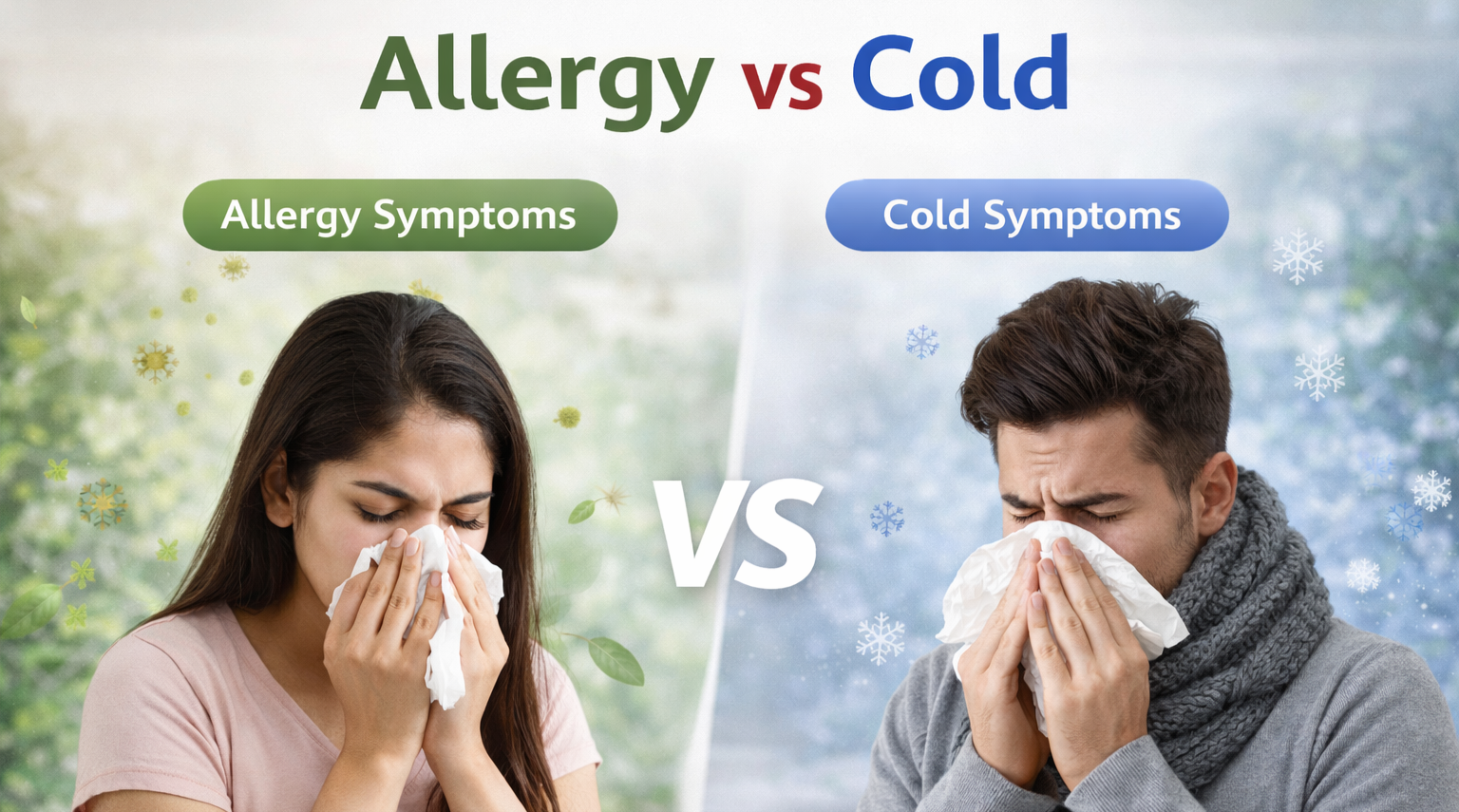
Many people mix up allergy vs cold because both cause sneezing, runny nose and cough. The good news: there are clear clues — timing, associated symptoms, duration and triggers — that help you tell them apart. This guide explains those differences, simple home-care steps, treatments that work for each, and when to get a consultation.
Quick summary
- Onset: allergies often start immediately after exposure to a trigger (minutes–hours); colds develop gradually over 1–3 days after a viral exposure.
- Duration: allergies persist while exposed (weeks to months if seasonal); colds usually resolve in 7–10 days.
- Fever: common with colds (sometimes); rare with uncomplicated allergies.
- Itchy eyes/nose/throat: typical of allergies; uncommon in colds.
- Mucus colour: thin, clear watery mucus often points to allergy; thicker, coloured mucus can follow a cold (especially after a few days).
- Seasonality & triggers: allergies follow pollen, pets, dust or mould exposure; colds spread from person to person.
Symptom checklist — read this like a diagnostic cheat-sheet
- Itching (eyes/nose/throat): → allergy (strong signal).
- Sneezing fits in bursts: → allergy.
- Sore throat + body aches + fever: → more likely a cold/viral infection.
- Sudden symptoms after being near pets, dust or outdoors on high-pollen days: → allergy.
- Progressive symptoms starting after 1–3 days of contact with a sick person: → cold.
- Cough that becomes productive (phlegmy) after a few days: → typically viral cold complication.
- Seasonal timing (spring pollen, autumn mould): think allergy.
Why the difference matters
Allergies respond to trigger avoidance, antihistamines, nasal steroids and long-term control plans. Colds are viral — they usually need rest, fluids, symptomatic care and sometimes antivirals for high-risk patients. Using the wrong approach (for example, expecting antihistamines to “cure” a chesty viral cough) delays recovery and comfort.

Home care tips
If it’s likely an allergy
- Remove or avoid triggers (close windows on high-pollen days, wash bedding, reduce pet access to bedroom).
- Start a non-sedating antihistamine and saline nasal rinses to clear allergens.
- Use a nasal steroid spray for persistent nasal congestion (best when used regularly — ask a clinician for guidance).
- Consider an air purifier and dust-mite covers if indoor allergens are a problem.
If it’s likely a cold (viral)
- Rest, hydrate, warm fluids and steam inhalation for congestion.
- Paracetamol or ibuprofen for fever/aches (follow age/dose rules).
- Saline nasal sprays and throat lozenges for symptom relief.
- Avoid antibiotics unless a bacterial complication is diagnosed.
Tests & when your clinician can help
- Allergy testing (skin prick or IgE blood tests): helps identify specific triggers and plan long-term control.
- Swabs / PCR for viruses: used in some situations (high-risk patients, testing requirements).
- Chest X-ray, spirometry: if cough is severe, prolonged, or asthma is suspected.
A clinician can also review medicines (e.g., ACE inhibitors can cause chronic cough) and check for mixed causes (allergic person with a superimposed cold).
When to see a doctor / get a consultation
Book a consultation if you have:
- Severe breathing difficulty, wheeze, or chest tightness.
- Fever >38.5°C lasting >48–72 hours.
- Cough lasting more than 2–3 weeks or getting worse.
- Recurrent seasonal problems that interfere with sleep, work or school.
- Need help choosing long-term treatments (nasal steroid, immunotherapy) or want personalised testing and avoidance strategies.

For personalised evaluation and medicine-aware advice, get a consultation with a qualified clinician who can arrange tests and a treatment plan tailored to your situation.
Prevention tips (for both allergy and cold)
- Wash hands frequently and avoid close contact with sick people to reduce colds.
- Maintain good indoor air: ventilate when outdoor air is clean, use HEPA filters if needed.
- Manage allergies proactively — regular nasal steroids and trigger control reduce infections and improve quality of life.
- Stay up to date with vaccinations as recommended (influenza, COVID boosters) to reduce viral illness burden.
FAQ
Q: Can allergies cause fever?
A: Uncomplicated allergies rarely cause true fever. If you have fever, think infection and consult.
Q: Can a cold trigger allergy tests to be inaccurate?
A: Yes — active viral illness can alter test results; wait until recovery for reliable allergy testing or ask your clinician.
Q: Can both occur together?
A: Absolutely — an allergic person can catch a cold, which may prolong symptoms. A clinician can help sort mixed cases.
